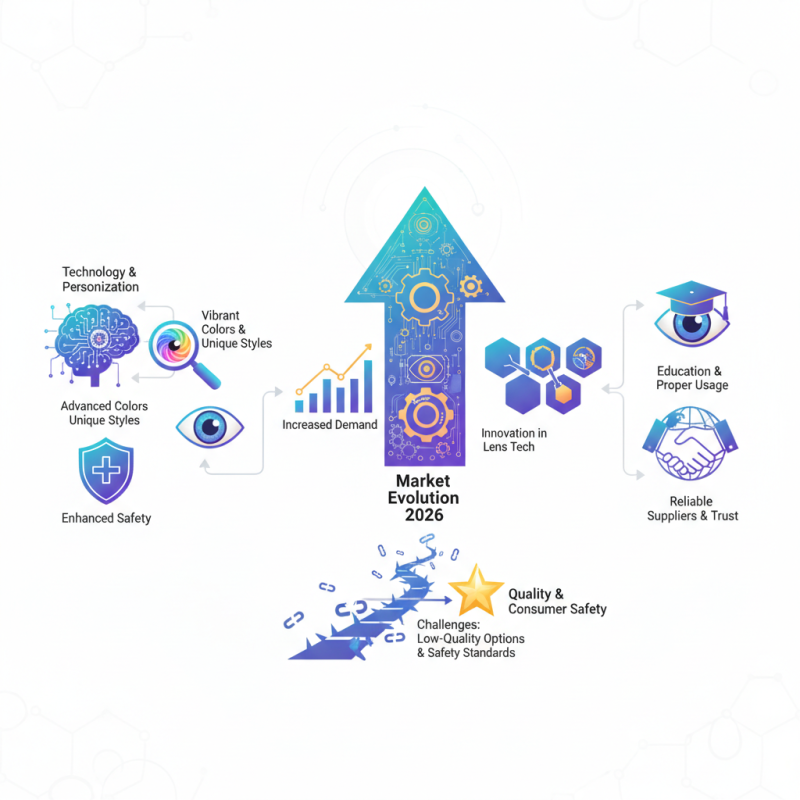
In 2026, the market for Wholesale Color Contact Lenses is poised for significant evolution. Industry expert Dr. Emily Chen states, "The future of color contact lenses lies in personalization and technology." This insight highlights the shift towards more customized options for consumers. As consumers seek unique styles and comfort, retailers must adapt to these preferences.
The trends shaping the Wholesale Color Contact Lenses market include increased demand for vibrant colors and advanced materials. Innovations in lens technology will enhance comfort and safety. Retailers will need to invest in education about proper usage. This focus on quality is essential for gaining consumer trust.
However, challenges remain. The market can be saturated with low-quality options. Not all lenses meet safety standards. Retailers must prioritize reliable suppliers. The road ahead is promising but requires reflection and dedication to uphold quality and consumer safety.
Current Market Overview of Wholesale Color Contact Lenses
The wholesale color contact lenses market has seen significant growth in recent years. This trend reflects consumers' desire for personalization and style. People aim to enhance their looks and express their identity through vibrant colors and unique patterns. The variety offered in color lenses now includes options for everyday wear and special occasions. This broadens the appeal to diverse audiences, including fashion enthusiasts and casual users.
Today, vendors are increasingly focusing on
product quality and consumer safety. Advanced manufacturing techniques ensure better comfort and eye health. However, some suppliers might still struggle with
consistency in quality. This inconsistency can lead to customer dissatisfaction. Reliable sources recommend that retailers prioritize partnerships with reputable manufacturers to mitigate risk.
Market insights highlight the rising demand for eco-friendly products. Consumers are becoming more conscious of their environmental impact. Offering biodegradable lenses could attract environmentally-minded shoppers. Yet, not all wholesalers may be ready to make this shift. Balancing sustainability with profits is a challenge that requires careful reflection.
Continuing education about market dynamics will help retailers navigate these trends effectively.
Emerging Trends Affecting Consumer Preferences in 2026
In 2026, consumer preferences for wholesale color contact lenses will continue to evolve. The current market data indicates that nearly 70% of consumers prioritize comfort and ease of use when selecting lenses. Detailed research shows that younger demographics, particularly those aged 18-24, lean towards vibrant and bold colors. They wish to express individuality through their eye wear. This trend signifies a shift towards fashion-forward options over traditional neutral tones.
Moreover, sustainability is emerging as a key factor in purchasing decisions. Approximately 57% of consumers express concern over the environmental impact of contact lenses. Brands that adopt eco-friendly materials or practices are likely to see increased loyalty. However, the industry also grapples with the challenge of balancing style and sustainability. Most lenses are not recyclable, leaving companies to rethink their production methods.
There is an observable gap in the availability of high-quality, affordable options in the market. Some consumers report dissatisfaction with existing products, citing discomfort or lack of options. This gap presents an opportunity for brands to innovate, focusing on both aesthetics and wearability. The future will require manufacturers to address these needs effectively to remain competitive.
Innovations in Color Technology and Design for Contact Lenses
Color contact lenses are undergoing a transformation driven by technological innovations. Advances in color technology allow for more vibrant hues and realistic appearances. These enhancements cater to diverse consumer preferences. Think about the possibilities: from natural shades to vibrant fantasy colors, the options are expanding. This diversity not only appeals to fashion enthusiasts but also serves those seeking unique self-expression.
Design plays a crucial role too. New materials are being developed for comfort and breathability. However, there are challenges. Not every consumer finds the perfect fit. Some lenses can feel irritating or cause dryness. Solutions require ongoing research and development. It’s essential for manufacturers to listen to user feedback to improve their offerings continually. As we look toward 2026, the focus on innovative designs and user experience will shape the future of color contact lenses significantly.
Wholesale Color Contact Lenses Trends for 2026
Sustainability Practices in the Color Contact Lens Industry
The color contact lens industry is witnessing a shift towards sustainability by 2026. Manufacturers face increasing pressure to adopt eco-friendly practices. This includes using biodegradable materials in lens production. The goal is to minimize plastic waste. Innovative materials like biopolymers are gaining popularity. They can be produced from renewable resources, reducing the environmental impact.
However, challenges remain in implementing these practices. Many consumers are still unaware of the environmental issues related to color contact lenses. Education is crucial for encouraging eco-conscious purchasing habits. Transparency about production methods is essential. Brands must communicate their sustainability efforts clearly. It builds trust with customers and promotes informed choices.
The industry must also consider the life cycle of products. Waste management for used lenses needs improvement. Collaborations with recycling programs can help address this. Feedback from consumers is vital to enhance sustainability measures. Emphasis on a circular economy could lead to significant advancements in the sector. The path to sustainability is complex but necessary for the future of color contact lenses.
Wholesale Color Contact Lenses Trends and Insights for 2026 - Sustainability Practices in the Color Contact Lens Industry
| Year |
Market Size (USD) |
Annual Growth Rate (%) |
Sustainability Practices (%) |
Consumer Awareness (%) |
| 2022 |
750 million |
8 |
25 |
40 |
| 2023 |
810 million |
8.5 |
30 |
42 |
| 2024 |
885 million |
9 |
35 |
45 |
| 2025 |
975 million |
9.5 |
40 |
50 |
| 2026 |
1.1 billion |
10 |
50 |
55 |
Regulatory Changes Impacting Wholesale Color Contact Lens Sales
The landscape of wholesale color contact lens sales is shifting dramatically due to new regulatory changes. Authorities are becoming more vigilant in ensuring product safety and quality. Compliance with these regulations is crucial for wholesalers. They must adapt or risk losing market access. Increased scrutiny means more paperwork and testing for manufacturers.
These regulations can seem overwhelming. Some wholesalers may struggle to keep up with new compliance measures. It's not just about selling lenses; it's about meeting strict safety standards. Failure to comply could lead to costly penalties. Moreover, consumer trust hinges on perceived product safety. Transparency will be vital for brands to maintain their reputation.
As the market evolves, wholesalers must view these changes as an opportunity. Embracing regulatory frameworks can enhance product quality. This can attract more customers. Selling responsibly can set a business apart in a saturated market. The challenge, however, lies in balancing compliance with customer needs. How can wholesalers innovate while adhering to regulations?
Conclusion
The article "Wholesale Color Contact Lenses Trends and Insights for 2026" explores the evolving landscape of wholesale color contact lenses, highlighting current market dynamics and emerging consumer preferences. As we approach 2026, trends such as personalized color options and innovative designs are reshaping consumer choices, with an increasing demand for lenses that enhance both aesthetics and comfort.
Moreover, advancements in color technology are paving the way for more vibrant and durable lenses, driving sales in the wholesale market. Sustainability has also become a critical focus, with manufacturers adopting eco-friendly practices in production. Additionally, regulatory changes are set to impact the wholesale color contact lens industry, emphasizing the need for compliance amidst the changing consumer landscape. These factors collectively underscore the significant transformations in the wholesale color contact lens sector, preparing stakeholders for a competitive future.
